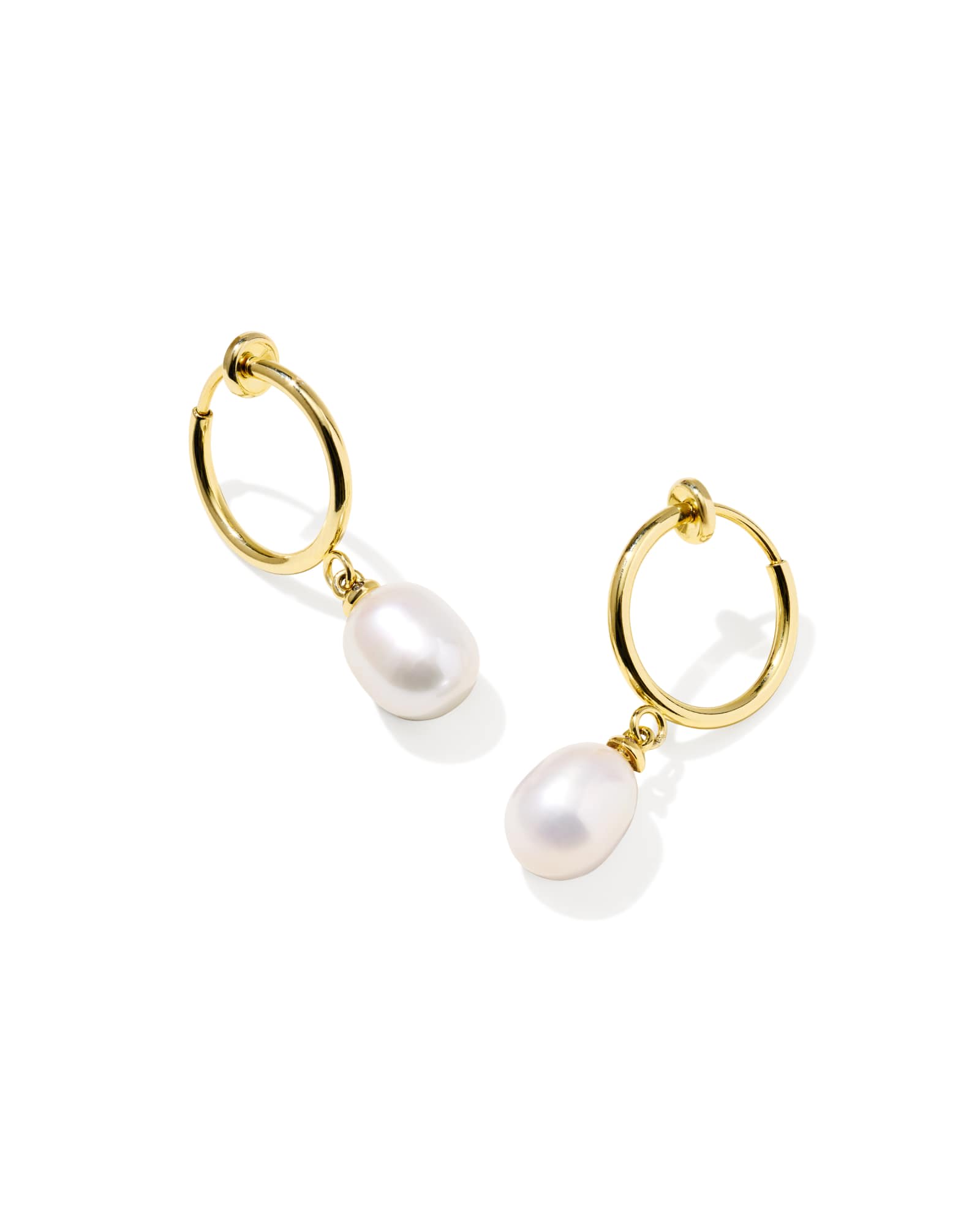
Hoop Earrings for Sensitive Ears
Hoop earrings for sensitive ears offer a stylish way to accessorize without compromise. Explore a curated selection designed to bring effortless elegance and comfort to your everyday look. Whether you prefer subtle, classic hoops or bold, statement-making styles, these earrings are crafted to help you shine at every occasion. Find the perfect pair of hoop earrings for sensitive ears and enjoy adding a touch of sophistication to any outfit.
Read More

Kendra Scott Kendra Scott Melody Gold Beaded Hoop Earrings in Freshwater Cultured Pearl | Aquamarine/Metal
A stylish pair of gold beaded hoop earrings featuring freshwater cultured pearls and aquamarine accents.
$94.97 $66.48
SALE

Kendra Scott Kendra Scott Mackenzie Sterling Silver Small Hoop Earrings in White Topaz | Topaz/Metal
A pair of sterling silver small hoop earrings featuring white topaz for versatile, stylish wear.
$150 $105
SALE

Kendra Scott Kendra Scott Emery Gold Enamel Hoop Earrings | Stainless Steel
A pair of gold-plated stainless steel hoop earrings featuring hand-painted white enamel and sparkling CZ accents.
$90 $63
SALE

Kendra Scott Kendra Scott Bold Etched 18k Yellow Gold Vermeil Hoop Earrings | Metal
A pair of dimensional hoop earrings in etched 18k yellow gold vermeil with a sterling silver base.
$270 $189
SALE
The best hoop earrings for sensitive ears pair materials your skin tolerates with a lightweight design and a closure that sits comfortably against the lobe. Both details matter: a small hoop can still feel uncomfortable if the post pinches, while a roomy hoop can feel fine at first but tug on the piercing as it swings. Start with the parts that touch the ear, especially the post and any back or clasp that rests against the skin. Those parts aren’t always made of the same material as the visible hoop, so a description of the outer finish doesn’t necessarily tell you what sits inside the piercing. If nickel is a known trigger, look for clear information about whether the post and other skin-contact parts are nickel-free. A term like “hypoallergenic” doesn’t guarantee that a pair will work for every wearer, and color alone doesn’t tell you which metal is in contact with the ear. If you like the cool sheen of a silver-tone hoop, Silver Earrings For Sensitive Ears offers another way to explore that look in different silhouettes while comparing the material details. An everyday pair that already feels comfortable can give you a useful point of reference. The visible hoop might be the part you love, but the post, the way the closure sits, or how little the pair moves may be what makes it so easy to wear. A similar fit leaves room to try a different profile, from a slim curve that barely peeks through your hair to a wider shape that frames the face. If a pair causes itching, redness, or soreness, take it off rather than trying to wear through the discomfort. A hoop that feels good on someone else isn’t necessarily the right match for your ears.
Hoop size is as much about clearance as it is about style. A close-fitting hoop can be a good match for days spent taking headphones on and off or pulling a sweater over your head, when a larger loop has more chances to catch. It should still leave enough room for the curve to sit without squeezing the lobe. If a piercing sits higher or farther from the edge of the ear, the same small hoop may fit more snugly than it would on a lower piercing. The inside diameter, when listed, gives you a better sense of the space within the hoop, while the outside diameter tells you more about how much of it will show. Comparing that inner measurement with a pair that already fits can be especially helpful if you’re choosing a close fit for a second piercing. Weight matters separately from diameter. A wide profile doesn’t tell you how heavy a hoop will feel, and a slim hoop can still pull if it swings with every turn of your head. If weight is listed, check whether it’s given for one earring or the pair before comparing it with a favorite. The closure also changes how the hoop feels over the course of a day. A clasp should close securely without pressing into the lobe, and a post should pass through a healed piercing without forcing it. A low-profile closure may be more comfortable when a headset or phone rests against the ear. For an everyday pair, picture the moments when you’d notice it most: tucking your hair back during a meeting, slipping a shirt over your head, or taking a call on the walk home. For a more dressed-up look, a slightly larger hoop can show against swept-back hair or an open neckline without needing a thick profile to stand out. The most useful size is the one that gives you the look you want without making you adjust the earring every time you move.
The hoops that get worn most often also benefit from simple care. Follow the care directions for the stated material and finish rather than assuming a cleaner that works on one pair will suit another. A soft, dry cloth can gently remove surface residue after wear, and letting hair products dry before putting earrings on can help limit buildup on the areas that sit against the skin. Keeping hoops in a separate pouch or compartment helps protect the finish from rubbing against other jewelry and keeps small closures from getting tangled in chains. Taking them off before sleeping, swimming, or activities where they could snag helps reduce unnecessary wear on the closure and tugging at the piercing. Get in the habit of checking the posts and clasps when you put them away. A closure that no longer meets cleanly, a bent post, or a rough spot near the piercing is a reason to set the pair aside rather than force it into place. Those details are worth keeping in mind when choosing hoop earrings as a gift, too. For someone with sensitive ears, the material they already wear comfortably is a better starting point than a description that promises broad suitability. The silhouette can still feel personal: someone who wears their hair down might like a hoop with just enough width to show, while someone who wears glasses or a headset every day might appreciate a smaller curve that stays close to the lobe. If they reach for the same little hoops every morning, a similar size with a different outline can give them something new to wear without asking them to get used to a completely different fit. Whether the hoops are a gift or an addition to your own rotation, the details that make them easy to wear are the same ones that make them easy to reach for again: clearly described materials, room for the lobe, and a shape that suits how the wearer moves through the day.
Read More