


Jewelry Metals and Materials Compared: Buying Guide
Last updated:


Know your jewelry
Jewelry materials shape a piece’s appearance and care needs. Gold-filled, gold vermeil, and solid gold describe metal construction, while diamond, cubic zirconia, and Mother-of-Pearl identify stones or decorative accents. This guide compares those details to help you understand what you’re choosing and find jewelry that fits your style and routine.
Jewelry metals compared
| Metal or construction | Description | Durability | Relative price |
|---|---|---|---|
| 14K yellow or white gold | A 14K gold alloy throughout the metal, rather than a gold layer over a different metal core. | Can scratch; stones and settings need protection. Some white-gold designs have a rhodium finish. | $$$ – $$$$ |
| 14K gold-filled (Kendra Scott Ever) | A substantial layer of 14K gold bonded to a separate brass core. | Generally more resistant to gold-layer wear than conventional plating or vermeil; water-, sweat-, and tarnish-resistant. | $$ – $$$ |
| 18K gold vermeil | 18K gold plating over a Sterling Silver base. | Vermeil generally resists wear better than thin gold plating, but its gold layer can wear over time. | $$ – $$$ |
| 925 Sterling Silver | An alloy containing 92.5% silver. Kendra Scott Sterling Silver combines silver with 7.5% copper. | Sterling silver may tarnish with prolonged moisture, perspiration, salt water, or chlorine. | $$ – $$$ |
| 14K gold over brass (gold-plated) | A layer of 14K gold plated over a brass base, creating a gold-colored finish. | Plating can wear with friction and exposure; mindful wear and care help preserve the finish. | $ – $$ |
| Rhodium over brass (rhodium-plated) | A layer of rhodium plated over a brass base, creating a silver-colored finish. | Plating can wear with friction and exposure; mindful wear and care help preserve the finish. | $ – $$ |
More about metals
Gold purity and gold construction are different
Karat describes gold purity. A 14K gold alloy contains 14 parts gold out of 24; an 18K alloy contains 18 parts gold out of 24. Construction describes how that gold is used in the jewelry.
For example, 18K gold vermeil has an 18K gold surface over Sterling Silver. A solid 14K gold piece uses a 14K gold alloy throughout the metal. The higher karat number alone doesn’t tell you how the whole piece is constructed.
A finish can change the appearance of a metal
Rhodium can appear over different base metals. Rhodium over brass and rhodium-plated white gold have different underlying constructions, even if both look bright and silver-colored. Oxidized Sterling Silver has an intentionally darkened finish that highlights its details. Read the metal and finish together.
For more detail, explore our gold jewelry guide, Sterling Silver guide, and Ever gold-filled jewelry guide.
Compare diamonds, cubic zirconia, and other materials
A sparkling center could be diamond, cubic zirconia, glass, or another material. A colorful accent could be a gemstone, shell, or a layered material. The full material name gives you more information than its color or a photograph.
| Material | What it is | Appearance | What to know |
|---|---|---|---|
| Natural diamond | Diamond formed through natural geological processes. | Sparkle and appearance vary with the individual stone's cut, color, clarity, and proportions. | Highly resistant to scratching, but can still chip. Origin and individual characteristics matter when comparing stones. |
| Lab-grown diamond | Diamond grown in a controlled environment, with essentially the same composition and crystal structure as natural diamond. | Can look very similar to natural diamond. Origin cannot reliably be established by appearance alone. | Lab-grown identifies origin. Review the stone's specifications and the complete jewelry design. |
| Cubic zirconia, or CZ | A manufactured crystalline material made from zirconium oxide. | Can be colorless or colored, with bright sparkle and rainbow flashes. | A different material from diamond. It can scratch more easily than diamond and offers a generally lower-cost stone option. |
| Mother-of-Pearl | The nacre lining of certain mollusk shells, cut for use in a design. | A luminous, often iridescent surface. Colors may be enhanced. | A shell material, distinct from a cultured pearl. Protect its surface and follow the complete piece's care guidance. |
| Freshwater Cultured Pearl | A pearl grown in a freshwater mollusk with human assistance. | Soft luster, with variations in shape, color, and surface. | A cultured pearl is distinct from an imitation pearl. Its surface needs gentle handling and protection from chemicals and scratching. |
How to read a jewelry description from start to finish
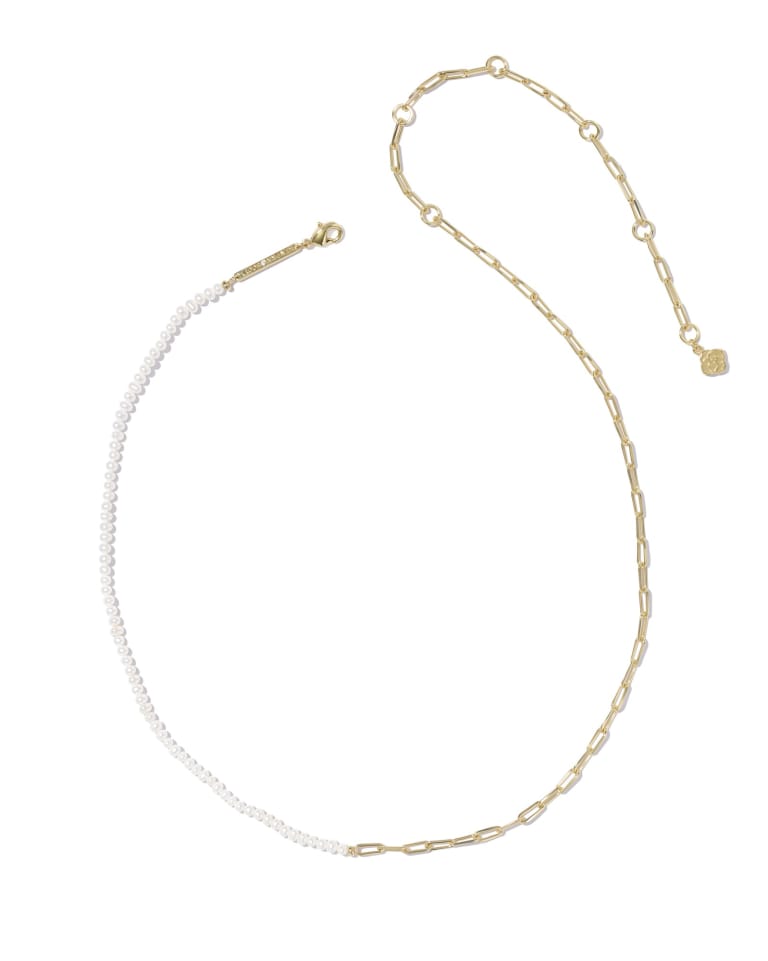

A product photo shows you the look, while the Details section helps explain what the piece is made of and how it’s designed to fit. Select your preferred color or metal option, then review the information for that exact version.
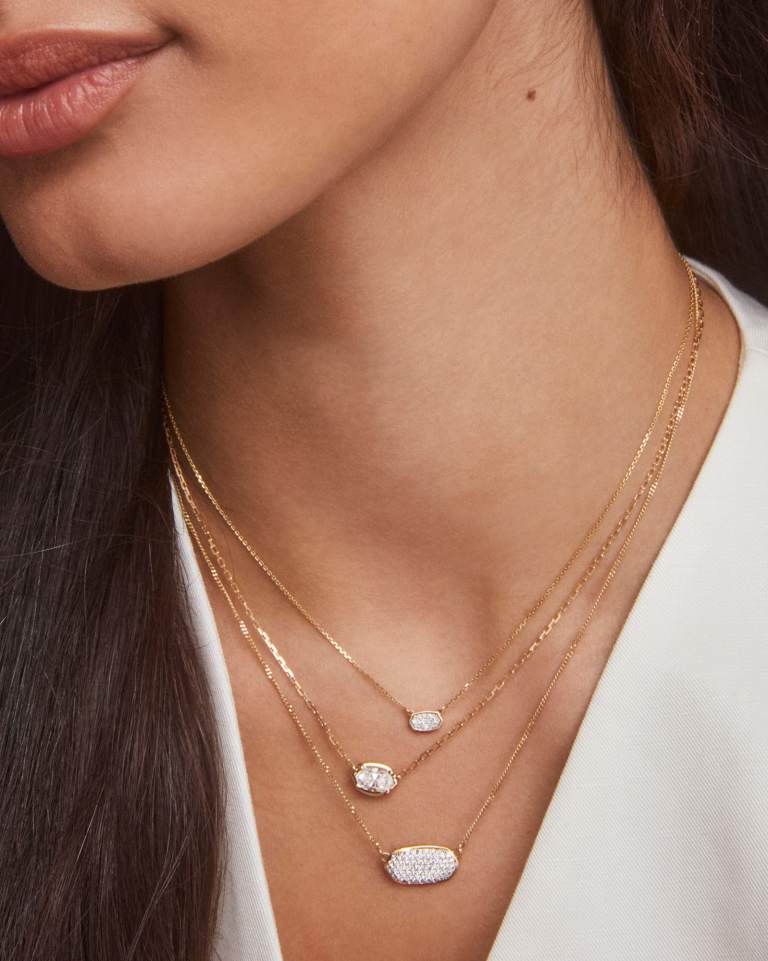
For the necklace pictured here, read the fields this way:
- Metal: The gold-over-brass description identifies a gold surface layer over a brass base.
- Material: “Freshwater Cultured Pearl” identifies the pearls used in the design, separately from its metal construction. Explore our pearl jewelry guide to learn more about pearl materials, styling, and care.
- Material highlight: This section offers additional context about the named material, such as its luster or distinctive appearance.
- Closure: “Lobster Clasp” identifies how the necklace fastens. Consider whether the closure suits how you like to put on and remove your jewelry.
- Size: “21"L” indicates a listed length of 21 inches. Compare it with a necklace you enjoy wearing, and check for any separately listed adjustment options.
Read these details together. The metal describes one part of the piece, while pearls, stones, and other decorative materials bring their own characteristics and care needs. Our everyday jewelry care guide explains how to build a cleaning and storage routine around the complete design.
For jewelry you already own, search its name or item number to find the original product details. If you need help identifying its materials or choosing a cleaning method, our Customer Service team can guide you.
Shop by metal
-
14K Gold-Filled Jewelry (Kendra Scott Ever) -
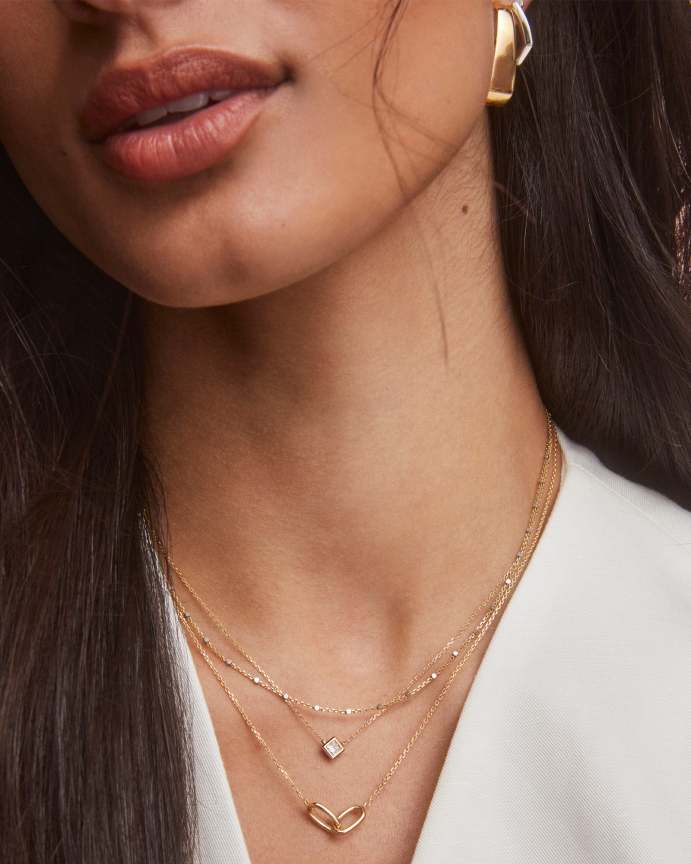
18K Gold Vermeil -

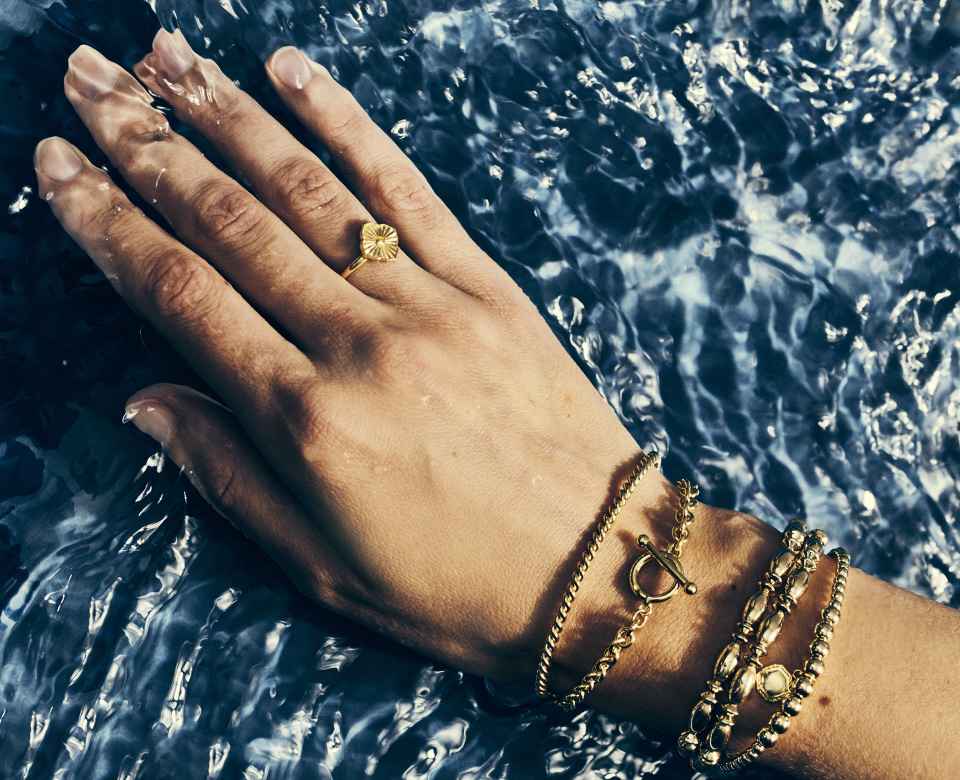
Sterling Silver
-
14K Yellow & White Gold -
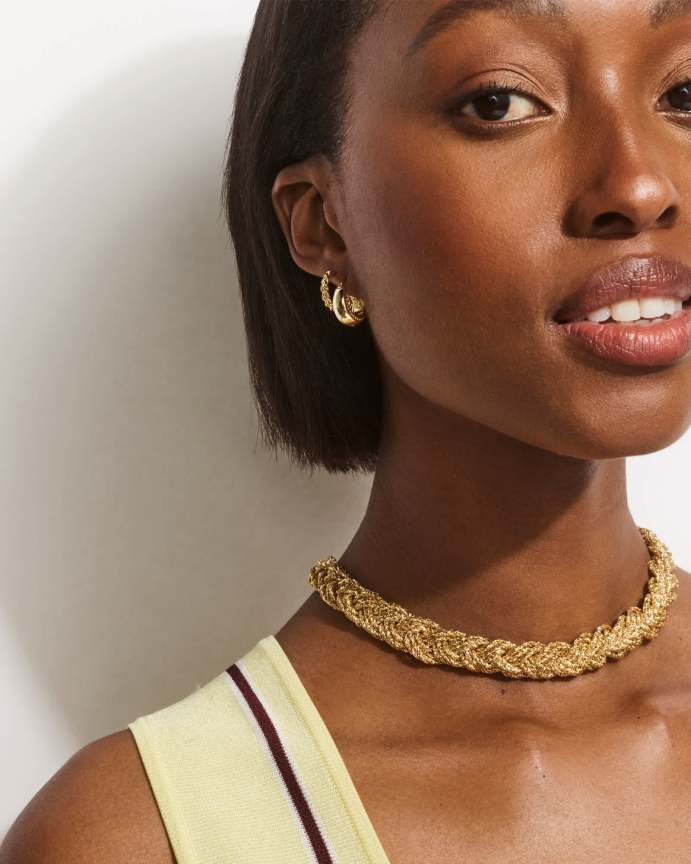
14K Gold over Brass (gold-plated) -

Rhodium over Brass (Rhodium-plated)
Shop Lab-Grown Diamonds
Shop Freshwater Cultured Pearls
Frequently asked questions
Gold-plated describes a surface layer, while gold-filled describes a bonded gold layer over a supporting metal. Vermeil uses a sterling silver base beneath gold; a piece described as solid 14K gold uses a 14K gold alloy throughout its metal. For Kendra Scott fashion pieces, look for the specific construction, such as 14K Yellow Gold over Brass.
Not by itself: karat identifies gold purity, not the amount of gold in a finished piece. In 18K Gold Vermeil, 18K describes the gold surface, while vermeil identifies the layered construction over sterling silver.
No. Cubic zirconia is a different material used as a diamond simulant; laboratory-grown diamonds are diamonds. White CZ means white cubic zirconia, not white diamond.
Mother-of-Pearl is shell material, while cultured pearls are produced by mollusks with human intervention. Look for the specific disclosure, such as Freshwater Cultured Pearl, rather than relying on a pearl-like color or appearance.
Solid 14K gold is the best choice among these options for long-term wear, with a gold alloy throughout the metal and no gold-plated layer to wear away. Gold-filled offers a durable bonded gold layer, while Gold Vermeil generally resists surface wear better than thin gold plating. Sterling Silver may need occasional polishing to remove tarnish.
Care still matters for every piece. Remove Fine Jewelry before swimming or exercising to protect its metal, stones, and settings. Kendra Scott Ever is water-, sweat-, and tarnish-resistant; follow any additional care instructions for its decorative details. Explore our everyday jewelry care guide for more.
Start with the product details for your selected color and finish, including metal, stone, dimensions, diamond origin, cultured-pearl identification, and any treatment or assembled-material disclosure. For more context, explore About Our Metals and the sterling silver, demi-fine jewelry, and fine jewelry guides.